

three things to look out for this week!
the Department of Commerce bets on one-stop licensing, Andy Burnham surprises the UK space sector, and Canberra has a new space strategy


1. The U.S. Department of Commerce has proposed a solution for regulatory nightmares
What’s happening: Mission authorization, the process for authorizing and supervising commercial space activities that do not fall neatly under existing regulatory frameworks, is among U.S. space policy’s biggest challenges. In large part, the challenge is about fragmentation of the U.S. space regulatory landscape. For example, launch, spectrum, and remote sensing are regulated by the Federal Aviation Administration (FAA), Federal Communications Commission (FCC), and Department of Commerce (DoC), respectively. But novel activities may not fit neatly under any one framework.
Navigating this fragmented system can be burdensome for firms. In response, the Office of Space Commerce (OSC) has proposed a new framework called the Space Commerce Certification.
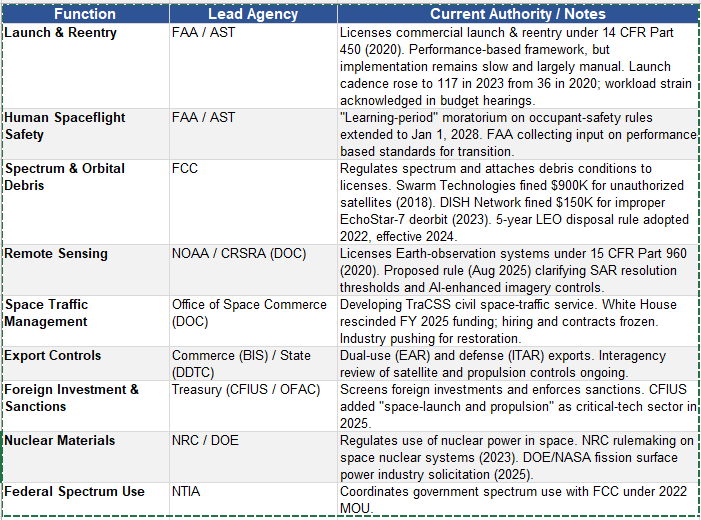
Figure 1. The current regulatory landscape in U.S. space policy. Credit to Bhavya Lal’s Substack.
Why it matters: The new certification aims to coordinate fragmented regulation and provide a faster pathway to authorization for a variety of space activities, ranging from manufacturing and satellite servicing to operating commercial space stations. Depending on the mission, firms may need approvals from several bodies operating under different criteria. Under the OSC’s proposal, agencies could rely on parts of the certification to reduce duplicative review. Assuming the proposal worked as intended, companies would face fewer regulatory hurdles and lower transaction costs. The OSC would act here as a central coordinator, helping firms through FAA, FCC, and other agency approvals under a single interagency review. The certification would not replace licences required from those agencies. Yet if these bodies retain meaningful independent review roles, the fragmentation problem will persist.
The proposal should also be considered in the context of the office’s resources. The White House’s FY2027 request seeks just $11 million in overall funding for the office, which is about 80% below its FY2026 appropriation. Congress hasn’t yet finalized this cut, but the question arises: will OSC be able to increase its coordinating role with fewer resources? The answer may be yes, with a trade-off. If enacted, the same budget request would put TraCSS, the OSC’s space traffic coordination system, on hold. It’s also worth asking whether a “light-touch” approach would provide enough oversight for higher-risk activities, including crewed or large-scale lunar missions.
What you should look out for next: Watch whether the FAA, the FCC, and other agencies agree to rely on OSC’s review rather than repeat it. That will determine whether the proposal solves the fragmentation problem.
2. UKSA faces reorganization…again
What’s happening: Less than a week after taking office, British Prime Minister Andy Burnham has scrapped the UK Department for Science, Innovation and Technology (DSIT), a Rishi Sunak-era creation. The abolished department’s duties will now be divided between the Department for Business, Innovation, Science, and Trade (DBIST), the Cabinet Office, and the Department for Digital, Culture, Media, and Sport (DCMS).
Why it matters: Back in 2025, the UK Space Agency (UKSA) — which was previously semi-independent — was absorbed within DSIT. This was a first step toward increasing the department’s control over UKSA. The current government, however, seems to believe that things have become over-siloed. Transferring DSIT duties to DBIST also speaks to a general aim of making the government a key partner in the tech industry.
DBIST will now manage the UK Space Agency’s (UKSA) operations. One concern being voiced in response is that UKSA will now have to compete with the tech, AI, and steel industries for funding. The best-case scenario here is that streamlining UKSA’s functions will encourage more prudent spending and efficiency gains. The worst is that UKSA comes under more direct political pressure, and that coordination costs across three new departments lead to efficiency losses. Dame Chi Onwurah, Chair of the Science, Innovation and Technology Committee, has argued that splitting DSIT’s functions risks fragmenting vital policy and overloading departments that may lack capacity.
What you should look out for next: Watch how UKSA’s operations are absorbed into DBIST. Will space policy get dedicated ministerial attention like AI has with Kanishka Narayan’s cabinet-level prominence? Industry reaction will be an early signal of whether this reorganization will actually work.
3. Canberra picks its space battles
What’s happening: Last week, the Australian government issued a new Statement on Space, outlining Australia’s long-term national space policy objectives. The statement divides Australia’s space policy into five focus areas: (1) trusted space services, (2) spaceflight ecosystems, (3) space platforms, (4) microgravity ecosystems, and (5) exploration technologies.
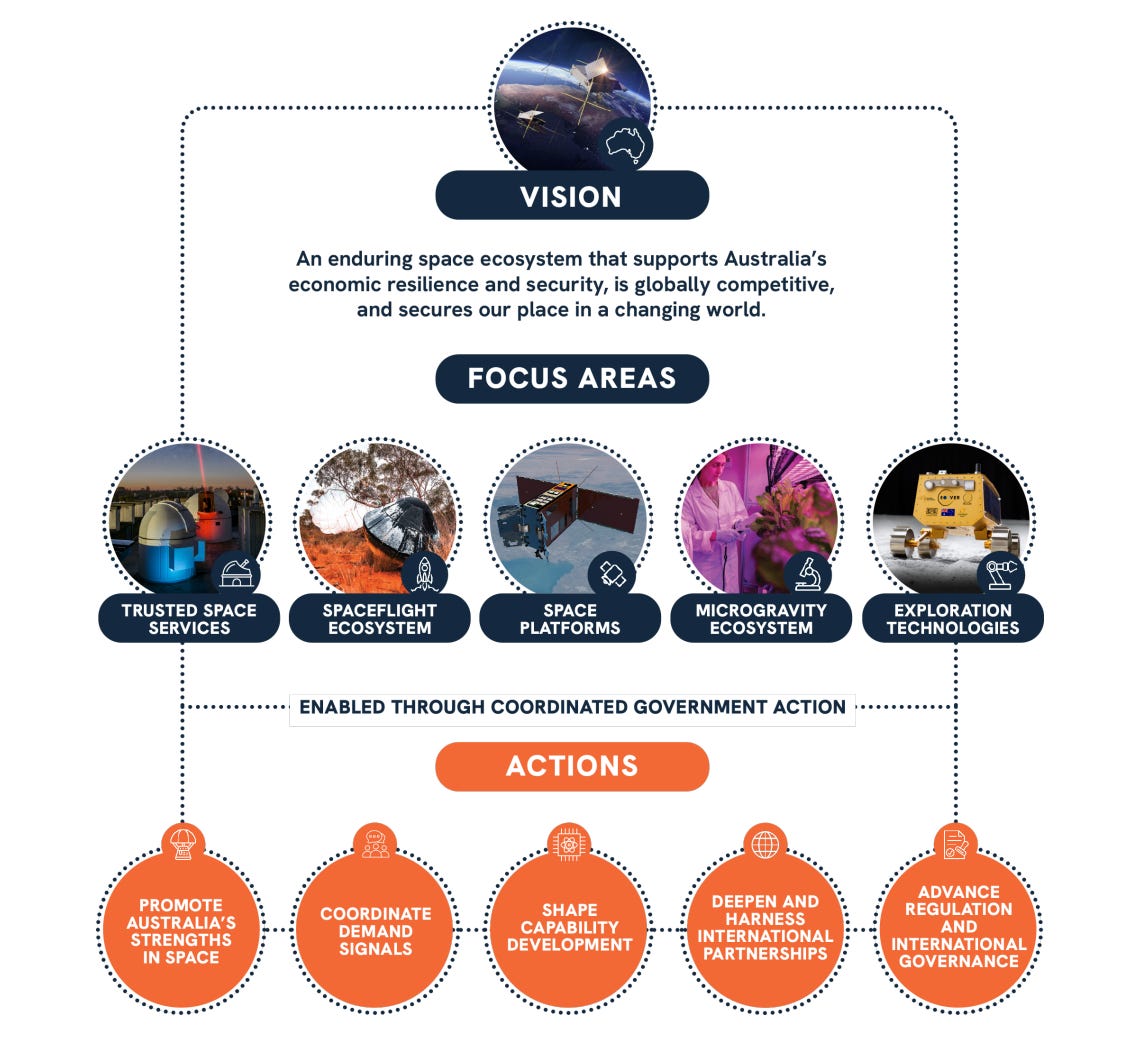
Figure 2. A snapshot of Australia’s Statement on Space. You can find the full statement here.
Why it matters: The Australian government released the Statement on Space alongside a Statement of Expectations to the Australian Space Agency (ASA), pushing for a greater commitment to regulatory modernization. If their goals are met, firms operating in launch, in-space servicing, and re-entry could see faster approvals. For now, however, both are statements of intent that must still be translated into regulatory reform.
What you should look out for next: ASA says it will lead targeted consultation with industry, academia, and government stakeholders to support space sector growth. Information on these consultations should be released later this year.